Two Homes, No Manual: 5 Things I've Learned as a Dual-Household Parent
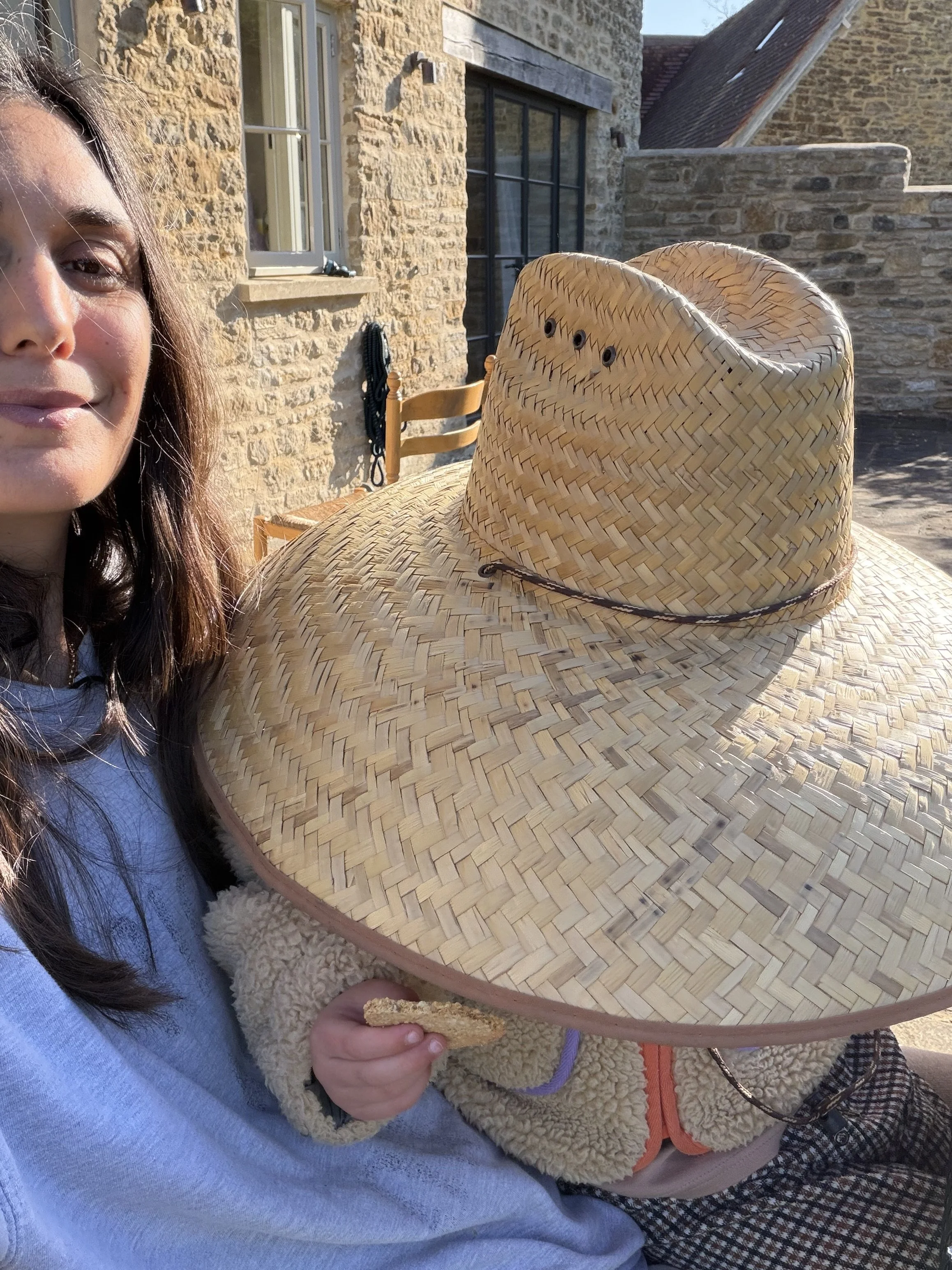
When your kid’s backpack carries their most precious items as much as it does their books and homework.
My son doesn't know he has a "primary parent."
To him, it's simple. This is his home. He sleeps here every night, his things are here, his life is built here. Some afternoons, instead of coming straight home, he spends a few hours with his dad. There's no main house and no other house in his mind — there's just his home, and the people who are part of his days. He doesn't know there's anything to notice, and honestly, that's the whole point.
If an arrangement like ours sounds unusual, it isn't. In the US, about 70% of children live with two parents, while roughly 1 in 4 lives with a single parent — and even within that "two-parent" group, around 8% are living with a stepparent. The tidy, one-home, two-parents-under-one-roof-doing-every-pickup family that so much of the world is built around is far from universal. Most of us are living something more specific than that. Childstats.gov
Here's what living it has actually taught me.
1. The tools aren't built for arrangements like ours.
So much of the infrastructure of school-age life assumes the same parent handles every afternoon, in the same place, on the same rhythm. Forms want one pickup person. Apps assume one unbroken after-school routine. And the co-parenting tools that do exist are built for a formal 50/50 split — not for "he's home with me almost always, but Tuesdays, Wednesday, and Fridays his dad collects him from school." We fall between the categories the tools were designed for, so none of them quite fit.
2. Traditional advice assumes a control you don't fully have.
So much parenting wisdom rests on one quiet assumption: that you can set the whole environment and hold it steady. Same routine, same rules, same expectations, every single day. It's good advice — and for the most part, as the primary home, I can actually do it.
But not all of it. A slice of his week happens somewhere I'm not, with another adult who loves him and reasonably enough does some things differently. There's no chapter in the parenting books for that slice — for the afternoons you don't see, the gap between how things run here and how they run there. Most books are written for the house. Fewer are written for the edges of it.
3. The seamlessness is the invisible part.
Here's the thing I've made peace with: "he doesn't know the difference" isn't an accident. It's the achievement.
The ease my son feels is built entirely on coordination he will never see — the texts about which afternoons this week, the mental handoff of a few hours I wasn't part of, the quiet tracking of what he ate, whether the reading got done, what mood he came home in. He gets to just be a kid with a home and two people who show up for him. Nobody will ever clap for that, because when it's working, it's completely invisible. The better I do it, the less there is to notice.
4. There is no average family.
The data makes this plain. Families simply don't come in one shape. Behind that 70% figure are children living with mothers only, with fathers only, with neither parent, with stepparents, with grandparents — and behind every one of those categories is a real arrangement messier and more specific than the label suggests. Ours doesn't even sit cleanly inside one of them. Childstats.gov
Each family is a fingerprint. Unique, layered, one of a kind, impossible to copy. Mine looks nothing like Sophia’s or my neighbour's, which looks nothing like yours. The "standard" family the forms and the apps and the advice are built for isn't really standard at all — it's just the one somebody decided to design for.
5. Lived experience isn't a nice-to-have. it's the whole thing.
You cannot design for a life you've never had to hold together at 5pm on a Tuesday, working out whose afternoon it is, what's been eaten, whether the homework got done somewhere you weren't. You can read about that life in a report. It's not the same as living it.
That's the reason behind Hold My Juice — building from the inside out, starting with the real, messy, one-of-a-kind shape of actual families instead of forcing them into a box that was never built for them. Not because I studied these families from the outside, but because I'm raising one. And so is Sophia. It just all takes different shapes.
There isn’t a template for parenting and there definitely isn’t one for families that don’t take the shape of a nuclear family.
The fact that there's no manual for this doesn't mean I'm doing it wrong. It means I'm doing something more specific than the format of a parenting article can hold. And the kid at the centre of it — the one who just knows he's home — is the proof that it's working or that it can work.
If your family doesn't fit the template either, I see you. You're not the exception. You're the norm nobody designed for yet.
