The story is the thing
How AI helped me keep the most important part of Passover — when I had nothing left to give.
When lived in SF, a rabbi told me something I have never forgotten. If you do nothing else for Passover, she said, tell the story. Not the four questions. Not the proper seder plate arrangement. Not even the right foods in the right order. The story. Experience it as if you, too, had been a slave in Egypt — and now were free.
My daughter, Noa, is named after that rabbi.
This year, Noa invited a group of people over for the first night of Passover. And I wanted to show up with something that honored the tradition she is named into. The problem: between a startup in beta, an engineering consulting practice, and my husband deep in tenure review, I had approximately the energy of a person who had already crossed a desert.
The most I could manage was picking up a to-go order from Mamaleh's, our local Jewish deli. But where was the story?
So I turned to AI. Not to replace the ritual. Not to outsource the meaning. But to make the meaning possible — to be the production assistant I didn't have, for the creative project I still wanted to do.
What I actually built
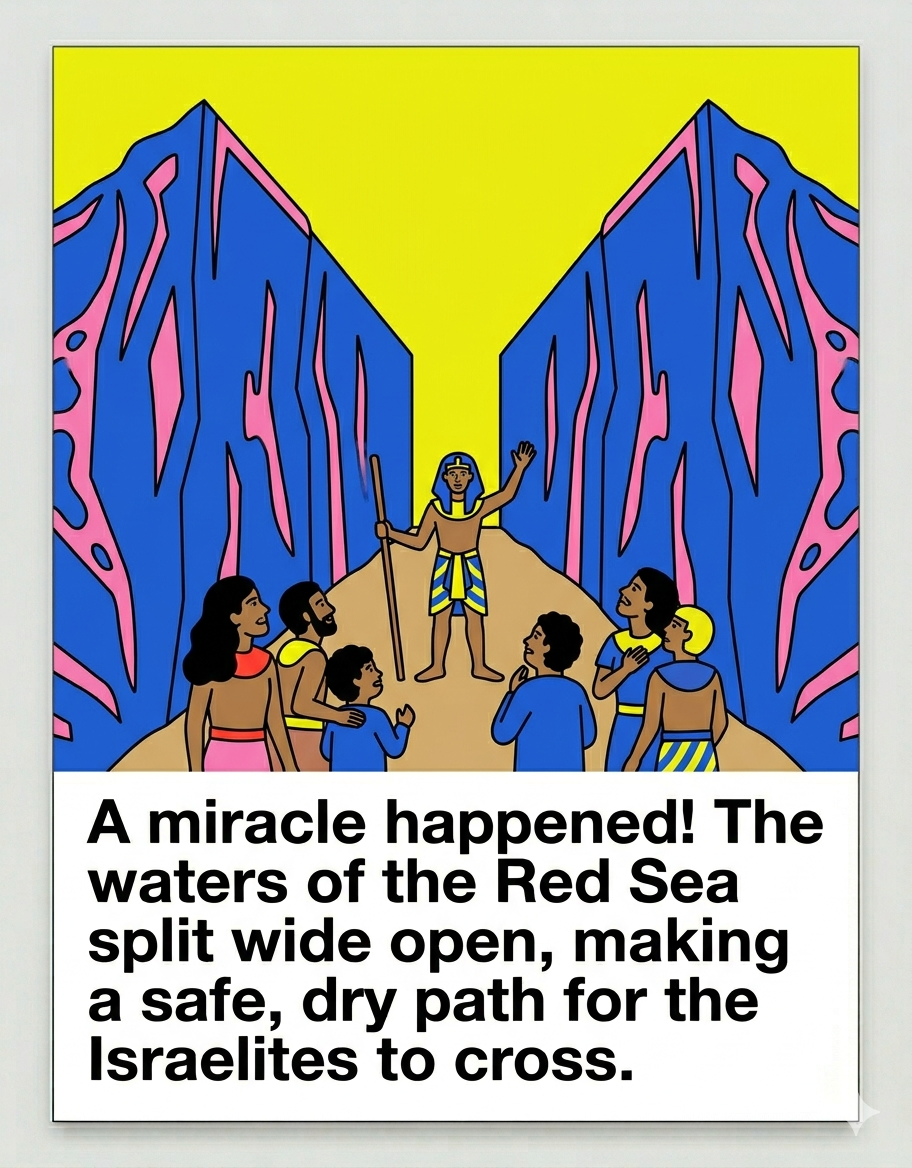
I used Gemini to create a complete illustrated version of the story of Exodus in a visual language I developed specifically for the table: bold primary colors, flat geometric cities, silhouetted animals, and big punchy captions written at a reading level that would let every kid at the table participate.
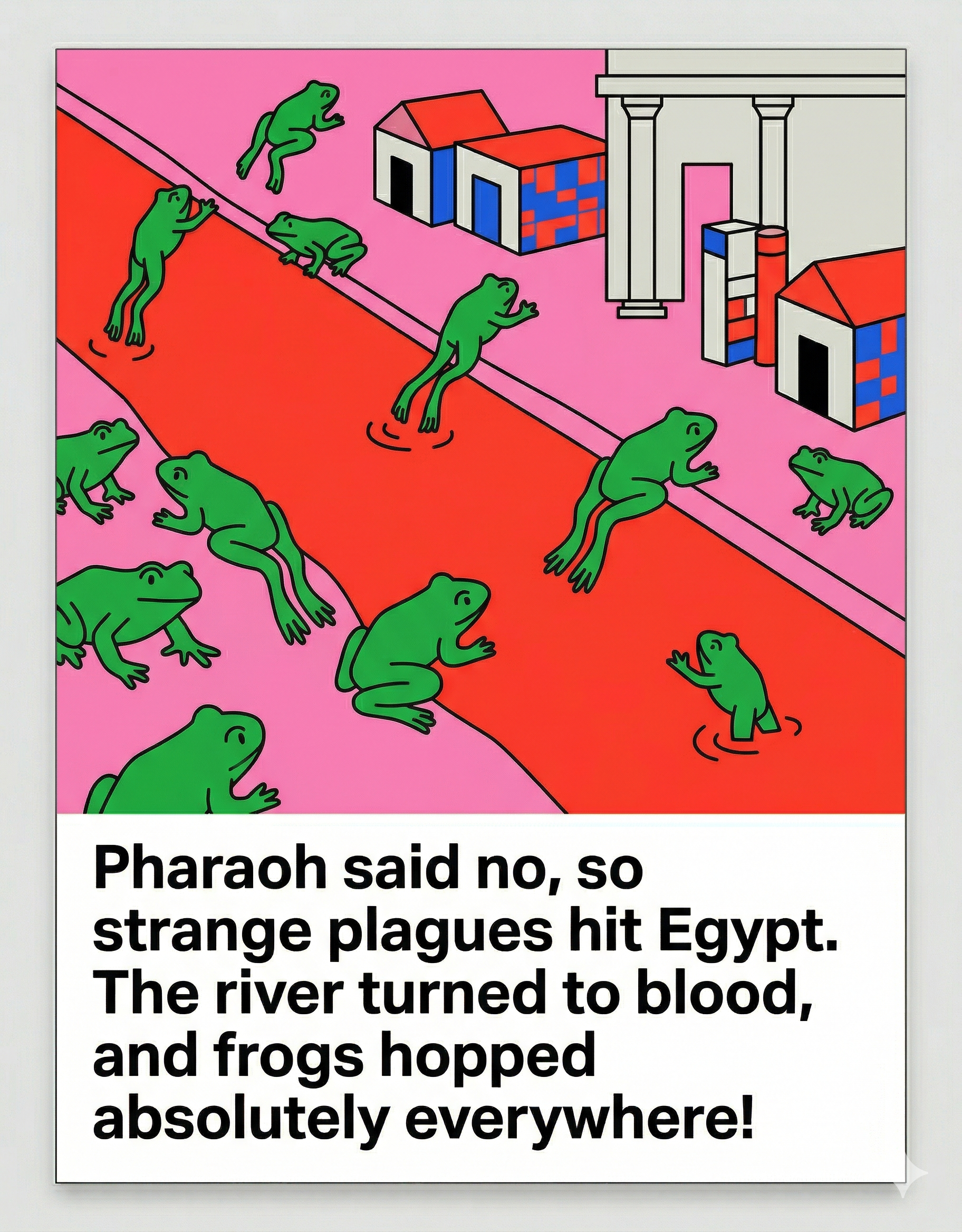
The ten plagues. The parting of the sea. The bitterness of slavery. The sweetness of freedom. All of it, told visually, page by page — designed to be passed around a table and read together, the way the tradition has always meant it to be.
This is not about AI being amazing
I want to be careful here, because it would be easy to write a post about how impressive the technology is. That is not the post I want to write.
What AI enables for me to be present as the parent and person I want to be. And the AI output is shaped by my own thoughts and values.
AI will not make the seder meaningful. The people at the table will. AI made it possible for me to show up as the person I want to be — even when I am running on empty.
That is the distinction I keep coming back to in my work at Hold My Juice: the difference between AI that replaces human presence, and AI that creates space for it.
What AI can do for family ritual
There is a version of this story where I feel guilty — where using AI to create something for a sacred occasion feels like cheating, or like a shortcut that cheapens the thing. I don't feel that way. And I've been thinking about why.
Family rituals are not preserved by perfection. They're preserved by showing up. The parents who hand-wrote haggadahs in the 1940s were using the best production tools they had. The families who bought Maxwell House haggadahs by the millions were making a practical choice in service of a sacred one. What matters is that someone set the table. Someone lit the candles. Someone said: tonight, we tell the story.
This year, AI will help me be that someone. Not by doing the meaningful part — but by handling the production so I could.
A note to other parents in the thick of it
If you are in a season where your capacity is maxed — where the tenure review and the startup and the school pickups and the consulting work have left very little of you for the things that matter most — I want to say this directly: the tools exist now to help you show up anyway.
Not perfectly. Not the way you imagined. But enough. The story is the thing. And the story can still get told.
Here’s the link to the story if it helps your family too.
